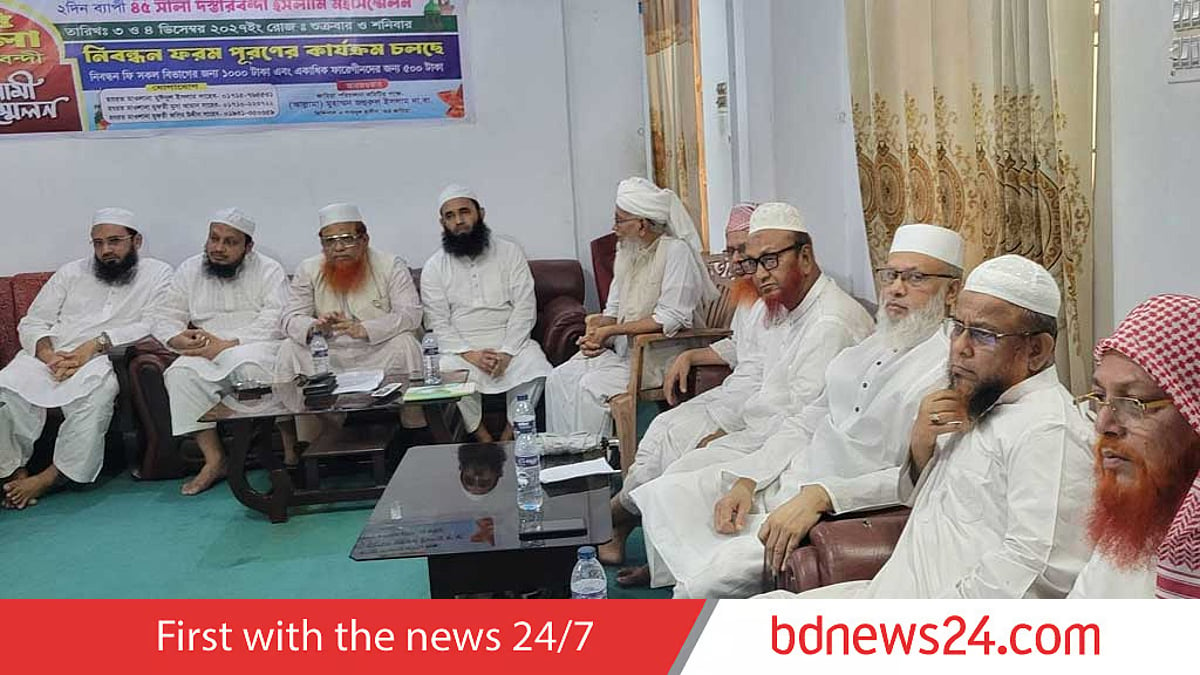
Seven Islamist political parties that draw on the Qawmi madrasa tradition announced on Thursday that they have formed a joint platform named "Somo Môna Islami Dol," or Like-Minded Islamic Parties, under the patronage of Hefazat-e-Islam Bangladesh. The decision was taken at a meeting of the parties' leaders held at the Makhzanul Ulum madrasa in Dhaka's Khilgaon area, chaired by Hefazat Secretary General Sajidur Rahman, according to bdnews24.com.
The seven parties are Bangladesh Khelafat Majlish, Khelafat Majlish, Islami Andolan Bangladesh, Jamiat Ulema-e-Islam Bangladesh, Islami Oikya Jote (Raji), Bangladesh Nezame Islam Party and Bangladesh Khelafat Andolan.
Ataullah Amin, joint secretary general of Bangladesh Khelafat Majlish, briefed bdnews24.com after the meeting. He said the parties had come together under the new banner with Hefazat's cooperation, and that Hefazat's leaders would keep assisting them until the alliance's full framework is drawn up.
The meeting also set up a 21-member liaison committee, with three representatives from each of the seven parties. Ataullah said the next meeting is scheduled for December 5.
Why it matters
The new platform brings together parties that have until now competed in separate camps at election time. In the 13th parliamentary election, the various Qawmi-oriented parties contested under different alliances and ran individually. A single banner does not by itself merge them, but it gives the grouping a shared channel for negotiating positions and, potentially, for coordinating at the local level.
The arrangement also illustrates how Hefazat-e-Islam, a Qawmi madrasa-based organisation, is positioning itself as a convenor among the parties rather than as a party in its own right. According to bdnews24.com, Hefazat deputy Amir Muhiuddin Rabbani said efforts to unite the madrasa-based parties under the organisation's top leadership had been under way for a long time, and that the seven-party banner was part of that process.
Overlapping loyalties
The alliance is not a clean break from existing political alignments. Bangladesh Khelafat Majlish and Nezame Islam Party (Izhar) are both currently partners in the 11-party alliance led by Jamaat-e-Islami, and Ataullah said the two will remain active in that coalition as well.
Jamiat Ulema-e-Islam, for its part, will stay with the governing BNP while also joining the new platform. Ataullah told bdnews24.com that the parties would remain in those political alliances and would also work through the like-minded grouping on the overall situation and on what he described as anti-Islamic activities. He added that they could be active under the new banner in local elections too.
One head of an Islamist party told bdnews24.com that there had been pressure to pull Bangladesh Khelafat Majlish chief Mamunul Haq out of the Jamaat-led alliance, and that this effort had been under way since before the February 12 national election. That did not succeed because of Mamunul Haq's refusal to move, the source said, leaving his party attached to both sides.
How the alliance took shape
The groundwork was laid earlier this year. On July 16, at Babunagar madrasa in Fatikchhari, leaders of the seven parties said at the invitation of Hefazat Amir Shah Muhibbullah that they had reached agreement in principle on unity. On September 27, again in Fatikchhari, the parties formed a liaison committee and said its members would meet in Dhaka on October 22 to take the final decision.
Thursday's gathering in Khilgaon delivered that decision. Besides Sajidur Rahman, those taking part included Jamiat Vice President Junaid Al Habib; Islami Andolan Bangladesh Secretary General Gazi Ataur Rahman; Jamiat Secretary General Manzurul Islam Afendi and senior joint secretary general Bahauddin Zakaria; Khelafat Majlish deputy amirs Sakhawat Hossain and Ahmad Ali; Nezame Islam Party Secretary General Musa bin Izhar; Bangladesh Khelafat Andolan senior deputy amir Mujibur Rahman; and Islami Oikya Jote Chairman Abdul Qadir and Secretary General Sak haw at Hossain Raji, among others.
The immediate test is whether the liaison committee can turn the shared banner into a working structure before the December 5 meeting. How the parties balance their new commitments against their existing ties to the Jamaat-led alliance and the BNP will be the thing to watch.